

Film
Apex: Man Or Bear

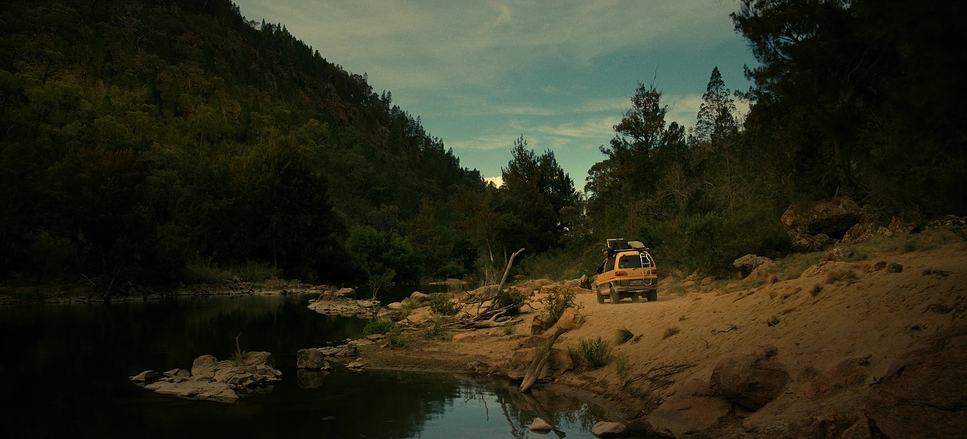
Have you ever heard that expression floating around the internet? The one that goes, “Would you rather be alone in the woods with a man or a bear?” This film makes the argument for the bear. Directed by Baltasar Kormákur, starring Charlize Theron and Taron Egerton. Set in the vast Australian Outback, the perfect place for a psycho killer to perform a ritual that mirrors The Most Dangerous Game.
Charlize Theron plays Sasha, a woman who could only accurately be described as a careless adrenaline junkie who refuses to listen to the advice of others. The perfect protagonist to push full steam ahead into a precarious situation that could have been avoided with much, much more foresight than could have been possible. But just enough for us as the audience to yell at the screen things like, “maybe just don’t go that way?” and the like.
Taron Egerton himself is not a murderous psychopath. But he does a phenomenal job portraying one. So much so, I don’t think I’ll ever be taking a hike with that man, no matter how charming he may be. His character is named Ben, or at least that is the only name he will give us. And Ben, just like everyone else, has his issues, though they are extreme.
I like that APEX focuses on the hunted, and it just so happens that the person being hunted is well trained to move through the Australian Outback and do her best to evade her pursuer. With scenes that drive the urge to learn how to rappel, so that if I do find myself being hunted, I won’t get shot full of arrows because I don’t know how to rappel down the side of a cliff.
Ben himself is a terrifying individual. I noticed he prefers walking around barefoot, a trait of someone who obviously feels closer to nature than he does to other people. With different gadgets and a base-camp set up, I can only assume Ben is an avid hunter. Sasha isn’t too immediately trusting, but unfortunately, it’s too late.
As Sasha is running through the jungle, I kept coming back to that same question. “Would you rather be alone in the woods with a man or a bear?” And how many people reacted in such a frantic way. Upset that some people, particularly women, would rather be alone in the woods with a bear than a man.
And I think it’s because, especially after watching Ben hunt Sasha down, that it’s because the Bear would attack only if it’s hungry or defending its young. But a man, like Ben, isn’t defending any young and isn’t starving. We know that Ben hunts other people simply because he wants to. It’s an idea I myself struggled a long time to wrap my head around.
And the consensus I came to was that some people will do horrific and unspeakable things to other people. For reasons that “normal” folk will likely never understand. Those people are what we call demons, or monsters. It’s where that “uncanny valley” feeling originated, at least I think that’s where it originated. We have been wired not to fear something that looks like us, but to fear ourselves. Because all the bad things done in this world have been done by humans, and you’re one of them.






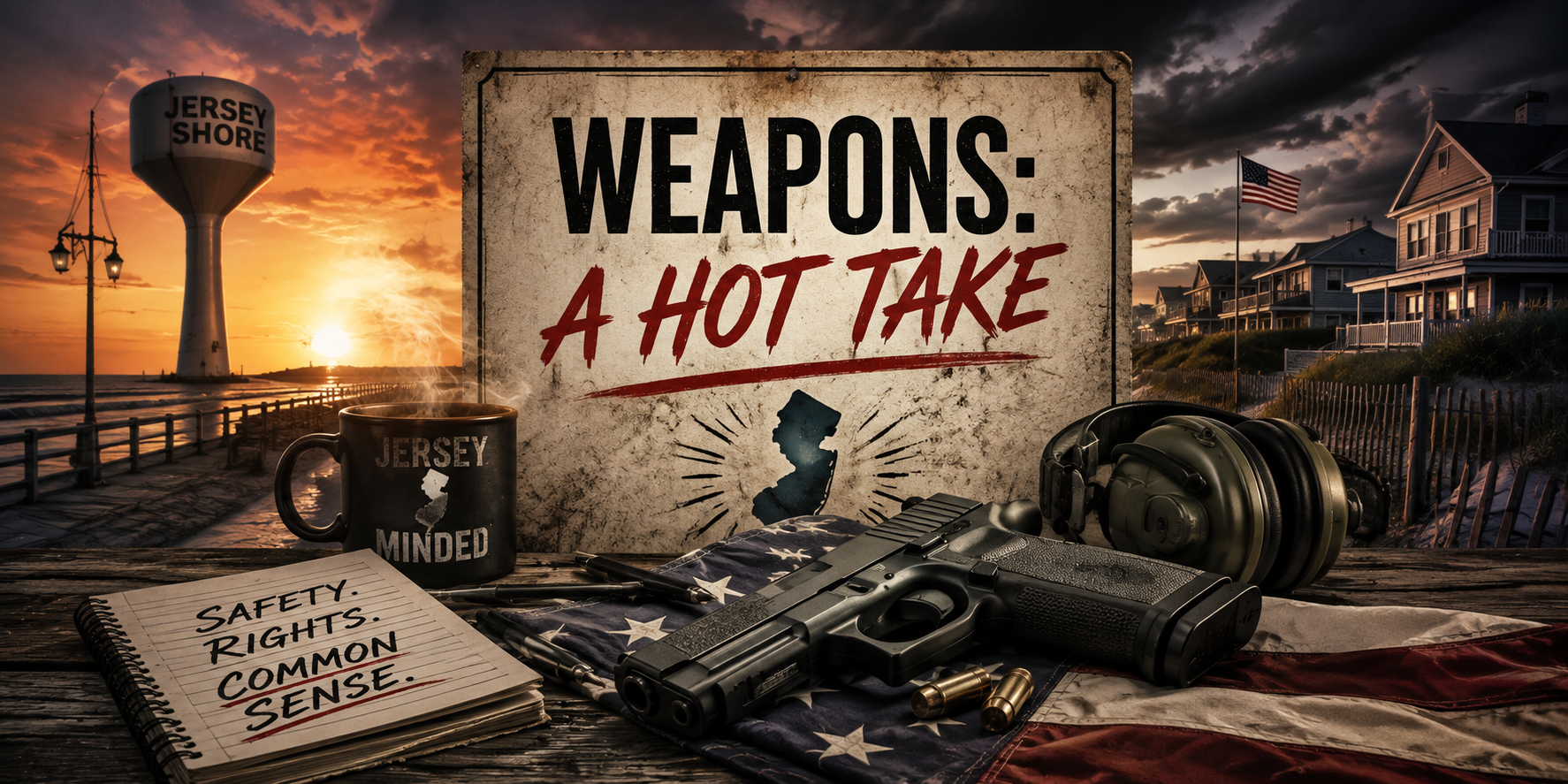
WEAPONS, directed by Zach Cregger, is a film heavily layered in unspoken mythology. When all but one child go missing from a classroom in a small town. Starring Amy Marian, Josh Brolin, and Julia Garner.
While I did enjoy the film itself, I think it has been put into the wrong category. Let me explain. Yes, it was a good film. The pacing was spectacular, not giving away too much overlapping information but filling holes precisely when needed so that we as the audience felt like we were uncovering the truth alongside the characters. Even though we knew from the beginning.
No one needs a wig that red with bangs that short. But I digress.
The ‘mythology’ in the film was great as well. The antagonist wasn’t overpowered with their ability to use magic in a world not accustomed to it. Personally, I enjoy when there’s a catch to everything. And we got to see that catch be the downfall of the villain. Aunt Gladys, played by Amy Marian. And while she was scary in her own right, it wasn’t like Alien. Where the mere sight of the monster sends chills down your spine.
No. Weapons is one that has you wondering. Fearing. That if you encounter the wrath of a witch like our antagonist, would you survive? If your child was taken, how calm would you be? And would you think through every single one of your actions before you do it? I think not.
It’s these things that make Weapons so suspenseful and such a great film. But I don’t think it’s been accurately categorized in horror/mystery and should instead be in thriller.
Because it is no mystery what happened, and while yes, there are a few jump scares, it is not what I would consider a classic horror film. Even in an age of change for the film industry, we need to stay true to the basic categorization. But what do I know? I’m just a guy who likes movies.
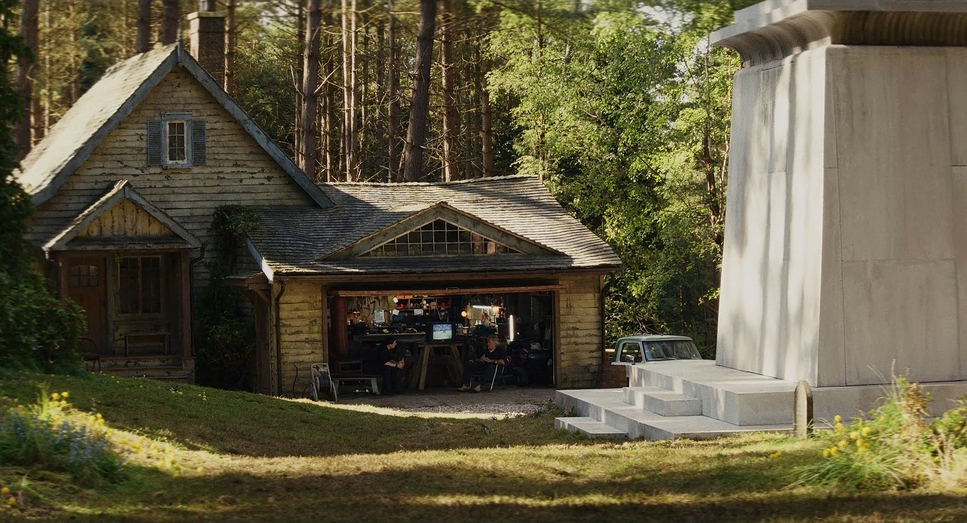
Wake Up Dead Man is the third installment in a series of murder mysteries. Directed by Rian Johnson and starring Josh O’Connor. With an amazing supporting cast of other stars in their own right. Together they draw us into a story centering Josh O’connor’s character, Father Jud, as he begins to meet the members of Josh Brolin’s, Monsignor Wicks, dwindling parish.
The film takes barely a moment to recognize that this is indeed a story being told in the past tense. With moments of voice-over cutting in just enough for that illusion to hold, and we, as the audience, can enjoy the film. Forgetting that whatever case, Senior Benoit Blanc, played by Daniel Craig, is being called to the parish to solve has already happened. And not to spoil anything, but due to the nature of the films, we know it is likely a murder that has taken place.
Monsignor Wicks, played by Josh Brolin, is as far from a ‘holy man’ as one could get. He is a highly divisive person who preaches about damnation and has a particular leaning toward preaching against ‘whores’ as he often says.
And because of his extreme tangents to his parish while they are captive in the pews, it is inevitable that the size of his ‘flock’ has diminished. That is why the church has sent Father Jud.
Father Jud was once a boxer, and has to be transferred to a smaller church because he hasn’t quite figured out how to squash that boxing bug. Father Jud continues to think in the boxer’s mindset even after his superiors try to display to him that an open hand is better than a closed fist. But seeing Monsignor Wick’s confession as his ‘first punch,’ it is obvious Father Jud has not let go of that anger and hate.
Hate is the central mechanism used to drive the plot along. Shrouding it behind the obvious reasons like greed and envy. It’s not uncommon for some people to covet what others have or even kill for it.
Johnson masterfully conducts the camera to keep the shot in constant movement and interactive for the audience’s eye. He enjoys the simple pan and the occasional long shot that slowly pulls in.
And while it is a murder mystery, the seriousness isn’t overdone. Being highlighted by a choice to be well-lit and accurately color graded. A detail consistent in the Knives Out series I enjoy, that can be purposefully disregarded for other murder mysteries to use shadow to ‘hide’ things.
The performances are spectacular, with Johnson’s input obvious as the actors all share a dryness to their line delivery consistent with real life as we have all experienced. Crazy the things some people say with a straight face, right? Father Jud helps Benoit Blanc gather clues, and the story has a wonderful ‘full-story’ moment when the detective makes Father Jud recite the sequence of events. A great way to end the voice-over.
Ending a voice-over is a moment in films that can sometimes be left out, and then the voice-over comes back much later in the film, almost after we’ve forgotten the narration existed. I find this to be something that takes me out of the film. And though it comes back near the end, Johnson was able to avoid it breaking the continuity.
Father Jud isn’t meant to help Detective Benoit Blanc crack the case, nor does he. In the final moments, Father Jud remembers his true calling. Not to fight sin but to embrace it. “It’s this, not this.” A saying Father Jud’s mentor, Father Langstrom, played by Jeffrey Wright, teaches him earlier in the film when Father Jud makes a boxing reference toward his new parish. Monsignor Wicks is a direct showcase of what this fighting mentality can create when held by someone who should embrace others and not battle them.
It’s this outlook that allows Father Jud to stay focused on what he is meant to do. And gets the most opportune moment to take a murderer’s confession. An opportune moment that would not have existed if not for Father Jud showcasing that he will not damn someone for their mistakes or questionable choices. A fear Monsignor Wicks implanted into the minds of his parish, and a fear Father Jud smashes.
Something that I believe is the most important moment of this film. Father Jud is surrounded by people who are, in title and words only, just like him. And while they could have furthered Father Jud’s descent toward anger, he already assaulted a colleague, Father Jud remembers the true calling of his religion. To embrace and not push away. Something highlighted by Benoit Blanc when he rants about religion to Father Jud.
Wake Up Dead Man is a film that can make you feel like you’ve truly witnessed someone go through a very needed lesson. A lesson that I thought I had learned before watching this film. Although it showed me that no matter how far along my journey. I could always take a step back and remember, “it’s this, not this.”
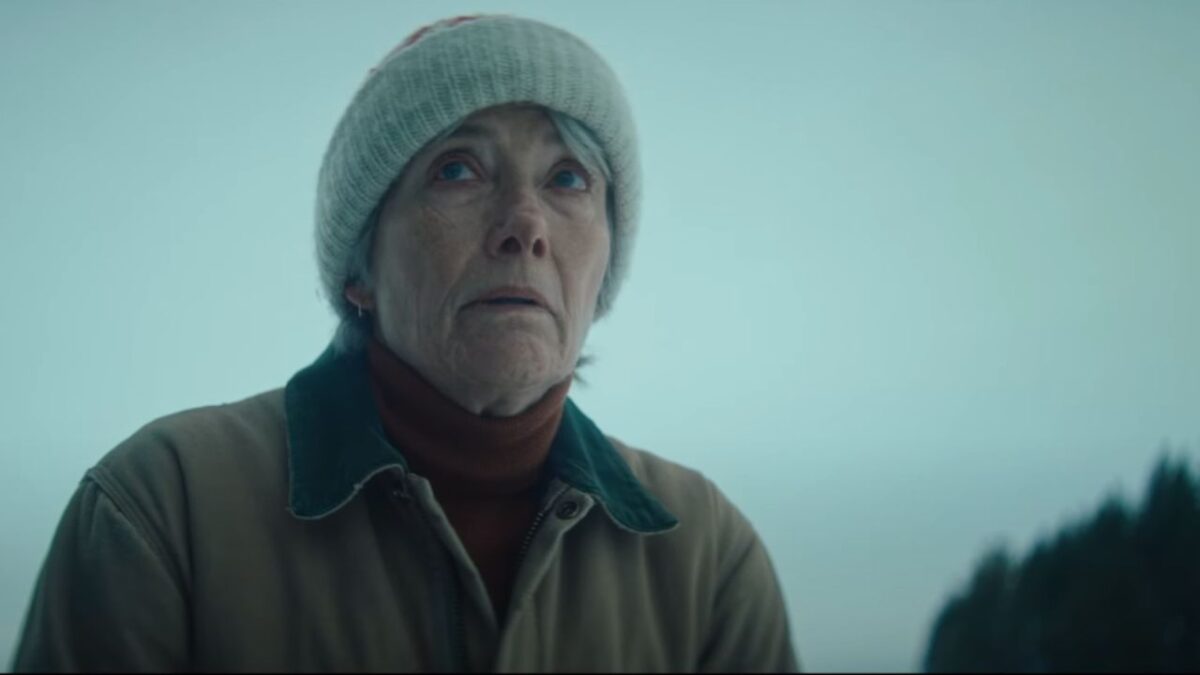
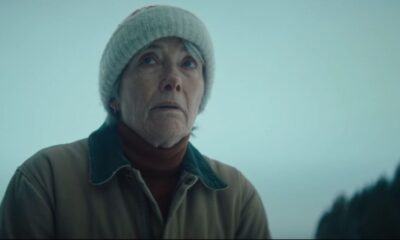
Directed by Brian Kirk, and starring Emma Thompson as Barb. A lone woman living in the frigid Minnesota wilderness. Brian is not shy of action-packed thrillers with intense sequences of quiet. 21 Bridges is his most recent film, which follows a similar plot and pacing.
Barb is that cheese-loving, ‘oh, darn’, Swedish-speaking Minnesotan who is worried about others and goes out of her way to try to solve problems for strangers. Which, in this case, is an extremely dire decision when Barb sees something suspicious out on the ice and just has to investigate.
Judy Greer, playing Purple Lady, has thoroughly enjoyed taking part in phenomenal thrillers, such as Halloween Kills. Greer plays the main antagonist in Dead Winter, a woman with a medical problem that will result in the end of her life if she doesn’t do something soon. She is ruthless and will do anything she can to save her own life.
Her drastic measure is to take another person’s life to save her own. The life of a young girl who attempts to end her own life, or so Purple Lady and her husband, Camo Jacket, played by Marc Menchaca, say, is the reason they chose her.
Camo Jacket doesn’t really want to be helping his wife kidnap a twenty-something-year-old. Leah, played by Laurel Marsden. But fortunately for us, the audience, he ain’t a creep and never alludes to being touchy, so we don’t have that bit of anxiety rattling the bones. But the circumstances are harrowing enough to make a chill fall down the spine.
But we do have the worry of what is going to happen to Leah? There is no possible way that Purple Lady and Camo Jacket would have kidnapped Leah for any good reason. Especially with the frozen tundra backdrop. Every single detail that could be caught by the eye on screen is highlighted by the endless white snow that forms the background, foreground, and set entirely.
Making the film a fun watch, because we know that every detail is important. So, trying to make out every single detail and determine what might be important for later adds an important interactive layer to the film.
Something done in thrillers that always holds my attention. Even while watching this on a plane, I caught my neighbors sneaking glances. So I know that when my jaw was hanging open, they knew. They knew Dead of Winter was a film to not only watch.
But to pay attention to. To study for the smallest editorial details in film that help with transitioning from an intense scene where Barb is looking for extra rounds to load into her weapon, to a flashback of her on her first date with her late husband.
These moments in the film added to the realism. Oftentimes in life, we don’t determine what the thing is that reminds us of someone. And oftentimes. Just like in real life, outside of the movies. Those memories come when we don’t want them. When they feel like they are in the way, all we can ask is, “Why? Why now? I didn’t need this, so why now?
But we did need it. It’s what keeps us going and inspires us to make that next step. Dead of Winter is a film that does just that. Reminds us to keep going and not stop. Even in the worst blizzards. Barb draws her strength from her memories of her late husband. And a funny connection that she and Leah share through a name.
It’s the culmination of these seemingly small details that make us root for Barb and Leah. Even while being able to understand the frantic fear of death that is driving Greer’s character. And in proper fashion to a harrowing thriller like this. The ending ties up any loose ends so that our victim can walk into the sunset, or in this case, sunrise, alone.

Sea.Hear.Now Is Sold Out. Here’s What Asbury Park Is Getting Next Weekend

Boots on BroadWalk: Red Bank Closes Labor Day With Line Dancing

Labor Day Weekend Isn’t Over: 5 Things to Do in Monmouth County Sunday and Monday

From the Jersey Shore to the DJ Booth: Pauly D Is Still Having One Big Party

Is the Jersey Shore Becoming Too Expensive for the Families Who Built It?
Labor Day Weekend Isn’t Over: 5 Things to Do in Monmouth County Sunday and Monday
From the Jersey Shore to the DJ Booth: Pauly D Is Still Having One Big Party
Boots on BroadWalk: Red Bank Closes Labor Day With Line Dancing
Sea.Hear.Now Is Sold Out. Here’s What Asbury Park Is Getting Next Weekend

The Captive: A Chilling Thriller About the Fight to Protect the Innocent

Alice In Chains

Tucker Carlson

Solo Mio Behind the Scenes (BTS)

NJ Film Expo 2025: A Breakout Moment for New Jersey’s Filmmaking Future

-

 Celebrity9 months ago
New Jersey Fame Wall
-
 Beaches & Towns6 months ago
Shore Towns Begin Early Safety Planning Ahead of Summer 2026 Crowds
-

 Beaches & Towns4 months ago
Great White Shark Sightings Spark Early Summer Conversation Along the Jersey Coast
-

 Beaches & Towns7 months ago
Breadsticks Cafe & Grill: A Cheerful Breakfast Spot with Ocean Views
-
 Entertainment7 months ago
Playwright & Filmmaker Tom Cavanaugh Named Finalist for 2026 TASTE Awards Following Recognition in Asbury Park
-
 Celebrity5 months ago
Southside Johnny: The Grandfather of the New Jersey Sound
-

 Features5 months ago
Il Leone: A Refined Italian Experience Rooted in Family, Fire, and Flavor in Matawan
-
 Entertainment7 months ago
Alice In Chains