Connect with us

Entertainment

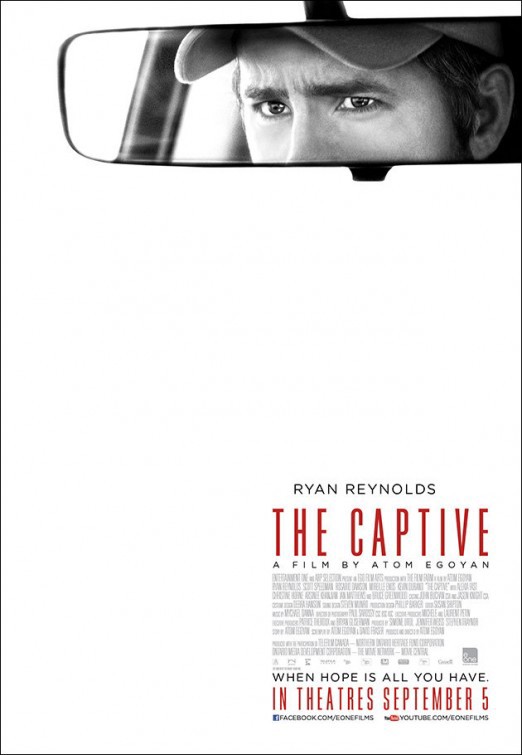
The Captive: A Chilling Thriller About the Fight to Protect the Innocent

Silver Screener

Published

on

The Jersey Review - The Captive Film Review

In an era when many thrillers rely on spectacle rather than substance, The Captive stands out as a tense and emotionally driven film that tackles one of society’s darkest crimes: the exploitation of children by predators who operate in the shadows. Starring Ryan Reynolds, the film delivers a gripping narrative that is less about action and more about the devastating emotional impact of a child’s disappearance and the relentless pursuit of justice.


Directed by Atom Egoyan, The Captive follows the story of Matthew Lane (Reynolds), a father whose life is shattered when his young daughter Cassandra vanishes during what should have been an ordinary afternoon. Years later, new clues emerge suggesting that Cassandra may still be alive and held by a secretive network of criminals involved in child exploitation.

What makes The Captive particularly unsettling; and compelling, is its portrayal of how predators can operate quietly within society. Rather than presenting villains as obvious monsters, the film shows how manipulative and calculating such individuals can be. The criminals in the story exploit technology, secrecy, and psychological manipulation to maintain control over their victims. In doing so, the film reminds viewers that these crimes often happen far from the public eye, hidden behind seemingly normal lives.

Ryan Reynolds delivers one of the most serious performances of his career in the role of Matthew. Known to many audiences for his comedic timing and charismatic roles, Reynolds shifts dramatically here, portraying a father consumed by grief, guilt, and determination. His performance captures the quiet desperation of someone who refuses to give up hope, even when the world around him begins to move on.


The film’s storytelling structure is deliberately fragmented, moving back and forth through time as investigators piece together the truth about Cassandra’s disappearance. This approach mirrors the uncertainty faced by families and law enforcement in real-life missing persons cases, where answers often emerge slowly and painfully.

While the subject matter is undeniably dark, the film ultimately focuses on resilience and the determination to confront evil rather than ignore it. Law enforcement characters in the film work tirelessly to unravel the network responsible for Cassandra’s captivity, emphasizing the importance of vigilance and cooperation in protecting vulnerable children.

Visually, The Captive uses stark winter landscapes and subdued lighting to reinforce its atmosphere of isolation and tension. The cold, snowy environment becomes a metaphor for the emotional emptiness left behind when a child disappears.

What also sets the film apart is its willingness to explore the psychological dimension of captivity. Rather than presenting victims as passive figures, the story examines the emotional survival and inner strength required to endure unimaginable circumstances.

Although The Captive is not a conventional action thriller, its slow-burning intensity keeps viewers engaged from beginning to end. It is a film that provokes reflection as much as suspense, reminding audiences that the fight against exploitation and abuse requires awareness, courage, and perseverance.

For viewers seeking a thoughtful thriller with emotional depth, The Captive offers a powerful story about the lengths people will go to protect the innocent—and the importance of never giving up hope.

  • The Jersey Review - The Captive Film Review

    The Jersey Review - The Captive Film Review

  • The Jersey Review - The Captive Film Review

A lifelong cinephile who haunts dark theaters and festival aisles, studying film as both art and cultural mirror.

Editorial

The Screwtape Letters in New Brunswick | Nov. 7–8

Shannon

Published

on

By

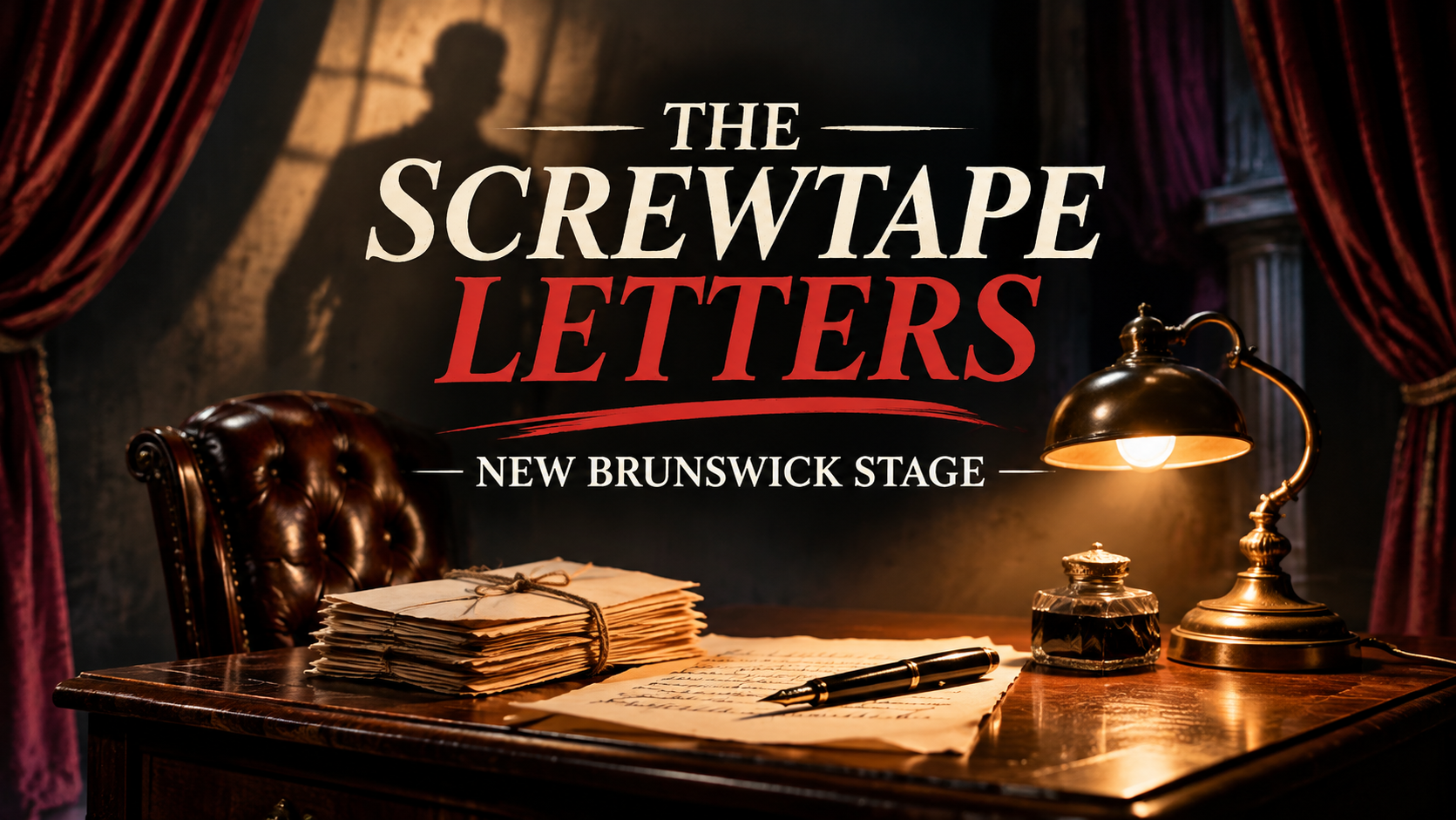
Promotional artwork for C.S. Lewis’ The Screwtape Letters stage production at New Brunswick Performing Arts Center.

More than 80 years after C.S. Lewis imagined a senior demon giving advice to his younger apprentice, The Screwtape Letters is still finding new audiences.

This weekend, the battle moves to New Brunswick.

Fellowship for Performing Arts is presenting its stage adaptation of Lewis’ Christian satire at the New Brunswick Performing Arts Center, with two performances today, Saturday, November 7, at 4 p.m. and 7:30 p.m., followed by a final performance Sunday at 3 p.m.

The production runs 90 minutes without an intermission and is recommended for audiences 13 and older. Children under 4 are not admitted. A short discussion follows the performance.

Hell Has an Office

The premise remains one of the most unusual in Christian literature.

Rather than telling its story from the perspective of a believer resisting temptation, The Screwtape Letters turns the camera around.

Screwtape is a senior demon in Hell advising his inexperienced nephew, Wormwood, on how to corrupt an ordinary human being referred to simply as “the patient.”

God becomes “the Enemy.”

Virtue becomes a problem.

Everyday weaknesses become opportunities.

The humor comes from watching familiar human behavior described from the opposite moral perspective.

Lewis first published the letters in installments during 1941 before the complete book appeared in February 1942. The work became one of his earliest major commercial successes, years before The Chronicles of Narnia made him a household name.

Taking an Epistolary Book to the Stage

Turning that structure into theater presents an obvious challenge.

The original work consists largely of letters from one demon to another, not conventional scenes filled with dialogue and action.

Fellowship for Performing Arts founder and artistic director Max McLean adapted and directed the stage production, transforming Screwtape’s correspondence into a theatrical performance centered on the demon’s office in Hell.

FPA describes the production as a faithful adaptation exploring temptation, spiritual warfare and human behavior through Lewis’ wit and satire.

The production has developed a long life of its own.

Fellowship for Performing Arts says The Screwtape Letters has previously had an extended New York run, a sold-out engagement in London and five U.S. tours. The organization has also acquired film rights to the work and announced plans to develop a motion-picture version.

Faith Without a Conventional Sermon

Lewis rarely approached Christianity by simply telling readers what to think.

In The Screwtape Letters, he used satire.

That gives the work an unusual place in religious literature and makes it particularly suited to a theater company trying to reach beyond a strictly church audience.

Fellowship for Performing Arts describes its mission as creating theatre and film from a Christian worldview for a diverse audience. The New York-based company has produced several works connected to Lewis and Christian thought.

The New Brunswick engagement is straightforward about its religious foundation, but the material itself spends much of its time examining recognizable habits: pride, distraction, selfishness, relationships and the small compromises people make without thinking much about them.

That may help explain why a book written during World War II can still fill theaters in 2026.

The technology changes.

Human nature is a little harder to update.

What to Know

C.S. Lewis’ The Screwtape Letters
New Brunswick Performing Arts Center
11 Livingston Avenue
New Brunswick, New Jersey

Saturday, November 7: 4 p.m. and 7:30 p.m.
Sunday, November 8: 3 p.m.

The production runs approximately 90 minutes with no intermission. Ticket availability varies by performance and seating section.

For readers who know Lewis primarily through The Lion, the Witch and the Wardrobe, The Screwtape Letters shows a very different side of the same writer.

No wardrobe.

No talking lion.

Just a demon at his desk trying to explain why human beings make his job so easy.

Continue Reading

Entertainment

Kevin Smith’s SModcastle Film Festival Returns to Atlantic Highlands for Four Days of Independent Film


Silver Screener

Published

on

For four days this week, one of Monmouth County’s most unusual movie theaters will turn almost entirely over to independent filmmakers.

The fifth annual SModcastle Film Festival runs Thursday, November 5, through Sunday, November 8, at SModcastle Cinemas in Atlantic Highlands, with features, shorts, documentaries and animation screening across the theater’s multiple screens.

The festival opens Thursday night with Serena, a 2026 science-fiction thriller starring Steven Strait and Andi Matichak. The film follows a struggling former rock star who agrees to beta test an advanced chatbot, only to find the relationship becoming much more complicated than expected. The opening-night screening is scheduled for 7:30 p.m.

From there, the schedule expands quickly.

Friday evening begins a series of numbered screening blocks, followed by a filmmaker mixer. Saturday becomes the festival’s busiest day, with screenings running from late morning into the evening across several auditoriums. Sunday continues with additional films before the festival closes.

A Film Festival Inside Kevin Smith’s Childhood Theater

The location gives this festival a little more character than the average multiplex event.

Smodcastle Cinemas sits at 82 First Avenue in Atlantic Highlands, in a building that has shown movies for more than a century. Filmmaker Kevin Smith grew up going to the theater and later became one of the partners who took it over in 2022. His longtime friend and Clerks collaborator Ernie O’Donnell is also involved in ownership and operation.

That history matters because Smith’s career began only a short drive away.

The Highlands-raised filmmaker made Clerks at the Quick Stop in Leonardo, building one of New Jersey’s best-known independent-film stories out of borrowed money, local locations and a very small production.

Now independent filmmakers are bringing their own work into the movie theater where Smith spent part of his childhood.

It is a fitting circle.

A New Jersey Premiere With an Especially Appropriate Story

One Sunday selection seems almost made for this particular festival.

Directors’ Commentary, written and directed by Joel David Santner, receives its New Jersey premiere Sunday, November 8, at noon.

The film follows an aspiring screenwriter whose career and marriage are falling apart before fictional versions of the filmmakers who inspired him begin appearing in his life. Those inspirations include Kevin Smith, Edward Burns and George Lucas.

Santner’s own production story carries some of the same independent spirit. According to the filmmakers, the feature was financed on credit cards and shot guerrilla-style with a four-person crew on weekends in Los Angeles.

Bringing that movie to Kevin Smith’s own theater is the kind of coincidence independent film fans will probably appreciate.

More Than One Type of Movie

Smodcastle’s festival is not restricted to a single genre.

Organizers accept feature films, short films, animation and documentaries from filmmakers around the world. A panel selects the work that ultimately makes it onto the theater screens.

That wide range is part of the appeal. Audiences can move between films they may never encounter at a mainstream theater, often with the people who made them sitting only a few rows away.

For filmmakers, that may be even more valuable than the screening itself.

Festivals are one of the few places where someone who spent months or years making an independent movie can finally watch strangers react to it in a dark theater.

And in Atlantic Highlands, that theater happens to belong partly to one of New Jersey’s most famous independent filmmakers.

Event Details

Smodcastle Film Festival
November 5–8, 2026
Smodcastle Cinemas
82 First Avenue
Atlantic Highlands, New Jersey

The festival’s current schedule and ticket availability are available through Smodcastle Film Festival and Smodcastle Cinemas. Get Tickets HERE.

Continue Reading

Entertainment

New Jersey’s Lost Films Come Back to Life at Monmouth University

Silver Screener

Published

on

The Jersey Review - New Jersey’s Lost Films at Monmouth

Some of the most revealing pieces of New Jersey history were never made for theaters.

They were home movies, local news footage, public films, community celebrations and recordings that spent decades sitting in archives.

On Saturday, November 7, some of that material will come out of storage.

The second New Jersey Archival Film Festival is scheduled for 9 a.m. to 1 p.m. inside the Great Hall at Monmouth University in West Long Branch. The event is free and brings together footage held by archives, universities, historical societies and other cultural institutions from around the state.

The festival is presented by the New Jersey Studies Academic Alliance, the New Jersey Caucus of the Mid-Atlantic Regional Archives Conference and the Bruce Springsteen Center for American Music.

A Very Different Kind of Film Festival

There are no red carpets or studio premieres here.

Instead, the program includes material that might otherwise remain seen mainly by researchers.

One selection looks at the New Jersey Turnpike. Another documents the relocation of a historic Victorian house in Englewood.

There are family home movies connected to Garret A. Hobart Jr., footage from Trenton, old Atlantic City images, scenes from the Wildwoods and a film trip through Vineland.

The morning program even includes Joe Albert’s Fox Hunt and Other Stories from the Pine Barrens of New Jersey, presented by the Media Burn Archive.

The result is a moving collection of small pieces of the state rather than one sweeping documentary trying to explain all of New Jersey at once.

Atlantic City Before the Casinos We Know Today

One of the most intriguing entries is Easter on the Boardwalk, presented by the Hagley Museum and Library.

Festival organizers describe featured material that includes footage of a 1950s Easter parade in Atlantic City.

For anyone accustomed to seeing Atlantic City through casino towers and modern Boardwalk tourism, archival footage offers something different.

The buildings change. The clothes change. The cars change.

The Boardwalk remains recognizable.

That is part of the strange appeal of old local film.

A familiar place can suddenly feel foreign.

Monmouth County Gets Its Own Look Back

The afternoon program moves closer to home.

“Talking 250,” presented by the MonmouthNJ 250 Committee, will connect the program to New Jersey’s role in the nation’s 250th anniversary.

Monmouth County Archives will also present Monmouth County Then and Now.

Other selections cover subjects including Newark’s Ironbound neighborhood, Rutgers’ first graduating class in Puerto Rican Studies and a performance by jazz musician Joe Wilder preserved by the Institute of Jazz Studies.

There is even campus footage of a snowy day at what was then New Jersey State Teachers College at Trenton.

None of it sounds like blockbuster cinema.

That is exactly the point.

Why Old Film Matters

Historic buildings can be restored. Documents can be scanned. Photographs preserve a fraction of a second. Film does something else. It shows people moving through a place.

A car turns a corner. A family walks along the Boardwalk. A crowd gathers. Someone looks toward a camera without any idea that another audience may be watching decades later.

The New Jersey Archival Film Festival is built around preserving and sharing those moments.

It is also a reminder that history does not only belong to presidents, governors and famous names.

Sometimes history is an Easter parade.

Sometimes it is a family picnic.

Sometimes it is a home movie nobody expected anyone outside the family to see.

And sometimes those ordinary pieces of film become the clearest window we have into what New Jersey once looked like.

Event Details

New Jersey Archival Film Festival
Saturday, November 7, 2026
9 a.m.–1 p.m.
The Great Hall, Monmouth University
400 Cedar Avenue, West Long Branch

* Admission is free. The organizers encourage advance registration but do not list it as mandatory.


Continue Reading

Trending