

Editorial
The Silent Epidemic: Why Your Child’s Future Hangs in the Balance:
As a seasoned journalist embedded with the trailblazers at Children’s Health Defense (CHD), I’ve witnessed firsthand the relentless pursuit of truth by Robert F. Kennedy Jr. and Dr. Brian Hooker. Their groundbreaking book, Vax-Unvax: Let the Science Speak (Skyhorse Publishing, 2023), isn’t just another opinion piece, it’s a meticulously curated arsenal of over 100 peer-reviewed studies that dare to compare the vaccinated against the unvaccinated. And what these studies reveal? Unvaccinated individuals often emerge healthier, with dramatically lower rates of chronic conditions that plague our society.


And How ‘Vax-Unvax’ Exposes the Truth Big Pharma Buried
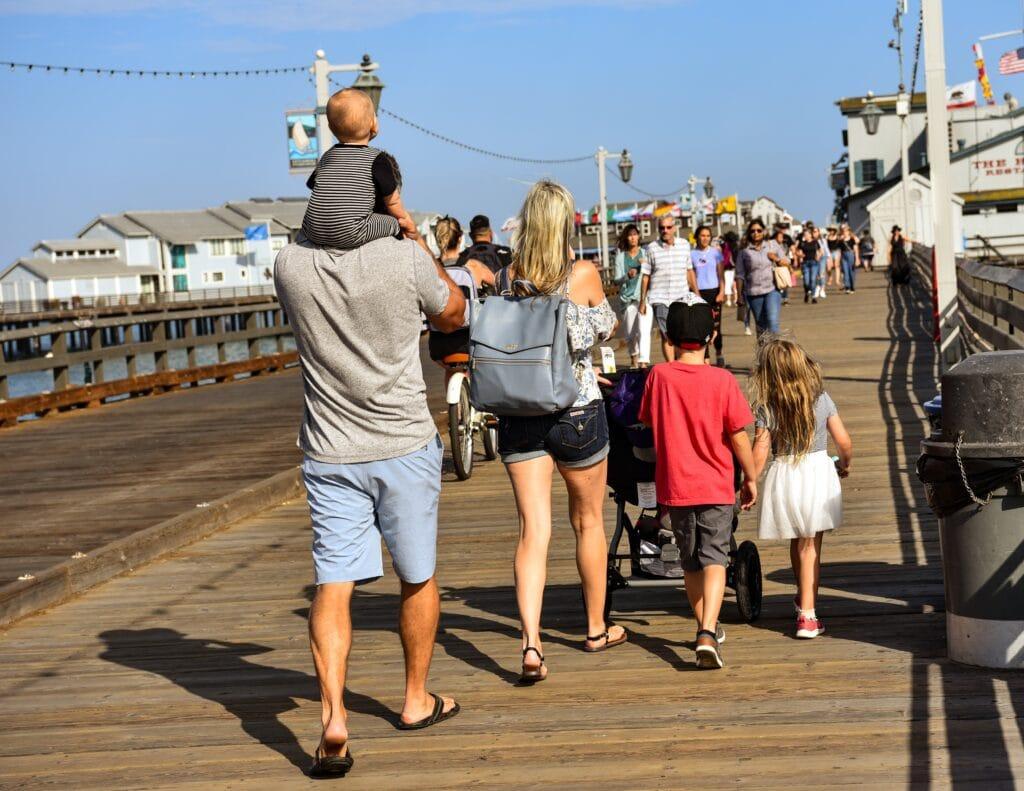
Imagine this: You’re watching your child play in the park, full of energy, laughter echoing through the air. But deep down, a nagging doubt creeps in. What if the very things you’ve been told to trust; the shots, the schedules, the assurances from experts, are quietly eroding that vitality? What if the rising tide of autism, allergies, asthma, and unexplained illnesses isn’t just bad luck, but a direct consequence of choices we’ve been pressured to make? You’ve felt it, haven’t you? That quiet unease when you hear another story of a healthy kid suddenly struggling. It’s time to stop ignoring it. It’s time to let the science speak for itself.
As a seasoned journalist embedded with the trailblazers at Children’s Health Defense (CHD), I’ve witnessed firsthand the relentless pursuit of truth by Robert F. Kennedy Jr. and Dr. Brian Hooker. Their groundbreaking book, Vax-Unvax: Let the Science Speak (Skyhorse Publishing, 2023), isn’t just another opinion piece, it’s a meticulously curated arsenal of over 100 peer-reviewed studies that dare to compare the vaccinated against the unvaccinated. And what these studies reveal? Unvaccinated individuals often emerge healthier, with dramatically lower rates of chronic conditions that plague our society. This isn’t conjecture; it’s data that’s been hidden in plain sight, suppressed by powerful interests who profit from your silence.
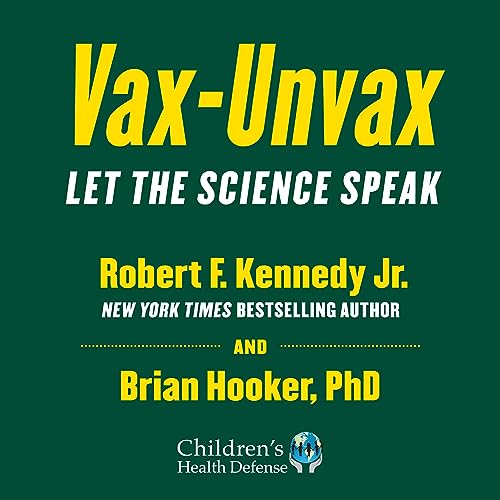
Picture yourself flipping through the pages of Vax-Unvax, feeling that rush of empowerment as the fog lifts. Kennedy, a New York Times bestselling author and environmental crusader, teams up with Hooker, a PhD in biochemical engineering with decades of experience dissecting vaccine data, to lay it all bare. Foreword by Del Bigtree, the Emmy-winning producer behind Vaxxed, this book isn’t for the faint of heart. It’s for parents, doctors, and truth-seekers who refuse to let their loved ones become statistics in a system rigged against them.
“Unvaccinated kids showed a staggering four times lower rate of chronic illnesses.”
Let’s dive into what the science actually says, because once you see it, you can’t unsee it. Take the Mawson study from 2017, a pilot comparison of homeschooled children. Unvaccinated kids showed a staggering four times lower rate of chronic illnesses. Allergies? Near zero in the unvax group compared to over 10% in vaccinated. Asthma? Virtually nonexistent. Ear infections and neurodevelopmental disorders? Drastically reduced. As you read this, imagine the relief of knowing your child could avoid these burdens. Hooker and Kennedy don’t just cite it; they dissect it, showing how Big Pharma’s lobbyists worked to retract and discredit it – but the data endures.

“Vaccinated children faced odds ratios skyrocketing: 4.49 times more likely to have asthma, 3.45 times for ear infections, over twice the risk for developmental delays and GI disorders.”
Or consider the Hooker and Miller analysis from 2020, pulling from real medical records across three practices. Vaccinated children faced odds ratios skyrocketing: 4.49 times more likely to have asthma, 3.45 times for ear infections, over twice the risk for developmental delays and GI disorders. Feel that chill? That’s the weight of evidence that’s been swept under the rug. Kennedy often references this in his CHD podcasts, emphasizing, “We’ve been told to follow the science, but when the science challenges the narrative, it’s censored.” And as you nod along, realizing he’s right, you start to see why this book is a game-changer.
“Geier’s 2014 dose-response study tied mercury exposure from thimerosal to increased risks of autism, ADHD, and tics.”
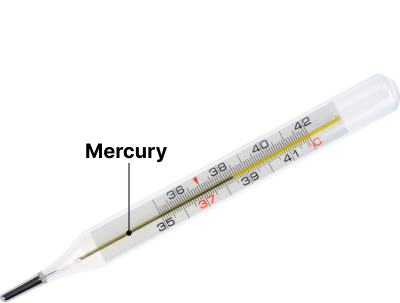
Dark clouds gather when we look at autism. The Gallagher and Goodman study (2010) found boys vaccinated with Hepatitis B at birth had triple the autism diagnosis rate. Delong’s 2011 research linked higher vaccination uptake to surging autism prevalence across states. Geier’s 2014 dose-response study tied mercury exposure from thimerosal to increased risks of autism, ADHD, and tics. Kennedy hammers this home in interviews: “The epidemic didn’t start until the vaccine schedule exploded. Coincidence? The studies say no.” As you absorb these facts, a sense of urgency builds – why risk it when the unvaccinated thrive?
“Five to ten times higher death risk post-DTP.”
But it’s not just neuro issues; mortality itself is on the line. Aaby’s work in Guinea-Bissau (2005, 2007) revealed unvaccinated children with lower death rates, while DTP-vaccinated girls faced double the mortality. Mogensen’s 2017 natural experiment? Five to ten times higher death risk post-DTP. In low-income settings, yes, but Kennedy and Hooker argue these non-specific effects echo globally, overwhelming young immune systems. Miller and Goldman’s 2011 international comparison showed nations with more vaccine doses suffering higher infant mortality. Lyons-Weiler and Thomas (2020) found vaccinated kids racking up two to five times more doctor visits for everything from respiratory woes to skin issues. Goldman and Miller’s 2012 follow-up? Dose-dependent hospitalizations and deaths climbing with each jab.
You know that feeling when a trusted friend reveals a secret that’s been staring you in the face? That’s Vax-Unvax. It paces with your concerns; the allergy epidemics, the asthma inhalers in every backpack, the autism rates now at 1 in 36, and leads you to the inescapable conclusion: We’ve been misled. Big Pharma rakes in billions while our kids pay the price. But here’s the good news: You can arm yourself. Right now, as you envision a healthier future for your family, picking up this book becomes the natural next step.
““This book changed everything for me,” shares one parent in a testimonial.“
Social proof abounds. Thousands have already awakened through CHD articles and Kennedy’s appearances on Joe Rogan, Tucker Carlson, and beyond. “This book changed everything for me,” shares one parent in a testimonial. “Finally, real science, not soundbites.” Doctors are whispering about it in hallways, policymakers are taking note. But scarcity looms, with censorship ramping up, copies could vanish from shelves. Don’t wait; secure yours today and join the movement.
Embedded in every chapter are calls to action: Demand the large-scale vax-unvax studies the CDC avoids. Question the schedule. Protect your loved ones. As Hooker states, “The data is clear: Unvaccinated groups consistently show better outcomes. It’s time we listened.” Kennedy adds, “This isn’t about anti-vax; it’s pro-science, pro-health.”
In a world where truth is the ultimate rebellion, Vax-Unvax is your weapon. Feel the pull? That’s your intuition guiding you. Head to Amazon, Barnes & Noble, or childrenshealthdefense.org now, before it’s too late. Buy the book, read the studies, and let the science speak. Your child’s tomorrow depends on what you do today.



Next year, America will celebrate its 250th birthday.
For a nation that has weathered wars, economic depressions, scientific breakthroughs, and generations of change, the milestone offers more than fireworks and parades. It presents an opportunity to pause and ask an important question:
What kind of country are we leaving to the next generation?
Much has been written about the “Greatest Generation,” those Americans who endured the Great Depression, fought in World War II, returned home, built businesses, raised families, and helped create decades of prosperity. Their legacy can still be seen in our highways, neighborhoods, schools, churches, and small businesses.
But every generation faces challenges unique to its own time.
Today’s Americans are navigating rising housing costs, changing technology, an evolving job market, and economic uncertainty. Many families have relied on some form of temporary assistance at different points in their lives, whether through unemployment benefits, disaster relief, food assistance, veterans’ programs, scholarships, or help from local charities. There should be no shame in accepting help when life takes an unexpected turn. Communities are often strongest when neighbors lift one another up during difficult seasons.
The larger question is what comes next.
How do we create a society that not only helps people through hardship but also encourages opportunity, independence, and long-term success? That conversation deserves thoughtful discussion, not political slogans. Families remain the first place where values are taught. Parents and grandparents often pass down lessons about responsibility, perseverance, generosity, and service long before children enter a classroom. Churches, synagogues, mosques, and other faith communities continue serving millions through food pantries, mentoring programs, counseling, addiction recovery, and volunteer outreach. These institutions frequently meet needs that government programs alone cannot address. Teachers, coaches, employers, and local business owners also play important roles. A first job, a trusted mentor, or someone willing to take a chance on a young worker can change the course of a life. Small businesses, in particular, have long been engines of opportunity in communities across New Jersey. They don’t simply create jobs. They teach skills, build confidence, and provide stepping stones for future entrepreneurs.
Self-reliance and compassion do not have to compete with one another. A healthy society can value both. Helping a struggling neighbor while encouraging personal growth is not a contradiction. It is often how strong communities have always operated. As America approaches its semiquincentennial, perhaps the greatest tribute we can pay to previous generations is not simply remembering what they built. It is continuing the work. That work may look different today than it did in 1946 or 1976. It may involve new technologies, different careers, and changing economic realities. But the principles that have strengthened communities for generations remain remarkably familiar: hard work, personal responsibility, strong families, engaged neighborhoods, and people willing to invest in one another.
The next 250 years of American history will not be written by governments alone.
They will be written by parents raising children with character, teachers inspiring curiosity, employers opening doors, volunteers serving quietly, entrepreneurs taking risks, and neighbors helping neighbors when life becomes difficult.
History remembers the generations that build.
The question now is whether ours will be remembered as one of them.
Every summer, the Jersey Shore becomes a stage.
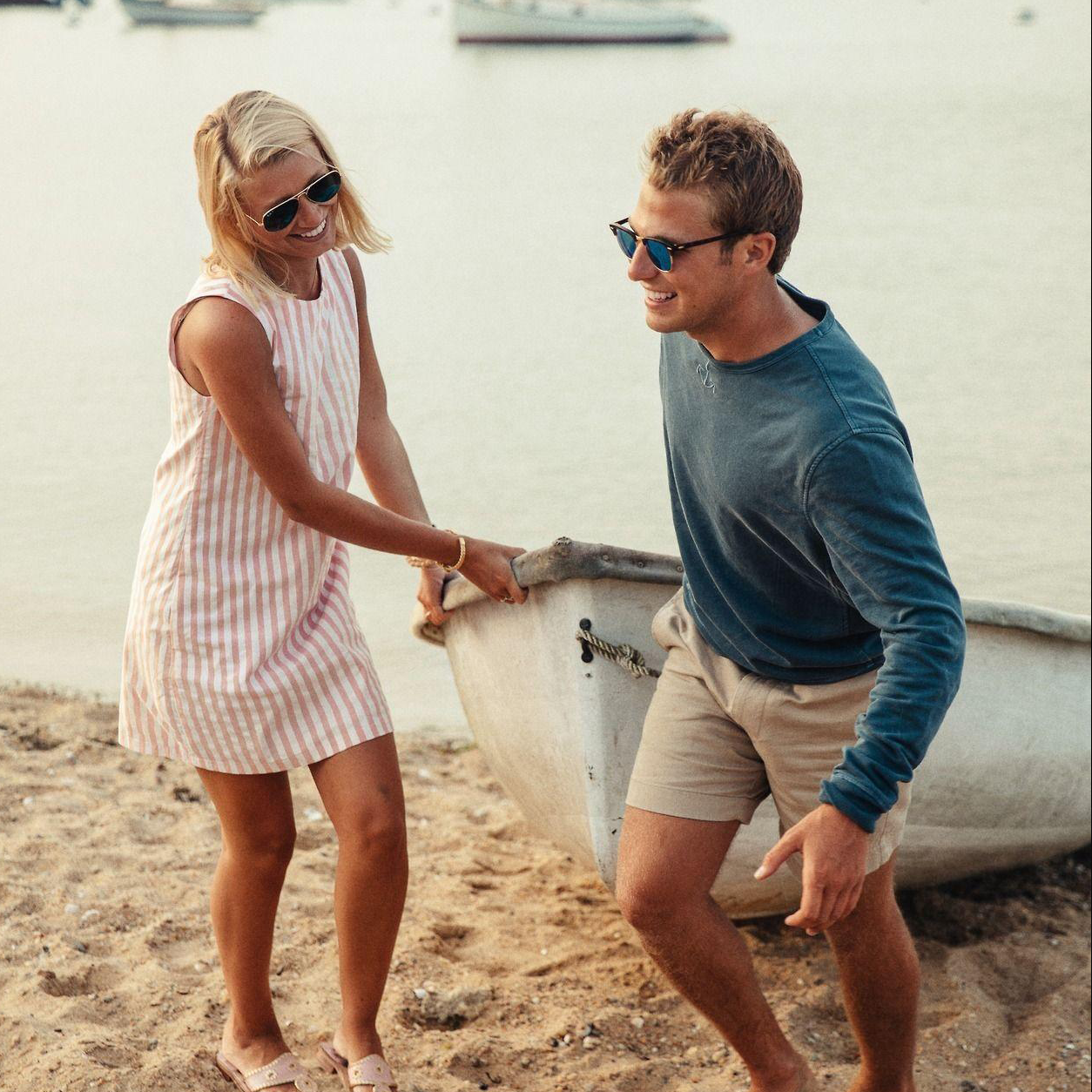
From the boardwalks of Belmar and Point Pleasant to the sidewalks of Spring Lake and Sea Girt, people step back into a tradition that is as much a part of Shore culture as salt air and ice cream cones: dressing well for summer.
Not flashy.
Not loud.
Not driven by whatever trend appeared online last week.
Instead, the Shore’s most enduring style remains rooted in something timeless: classic American coastal fashion blended with generations of European influence.
The Formula Hasn’t Changed
For men, the look is remarkably simple:
- Linen shirts
- Lightweight chinos
- Tailored shorts
- Polo shirts
- Crisp button-downs
- Loafers and boat shoes
Navy, white, khaki, and soft coastal colors continue to dominate because they simply work.
They look clean. They age well. They never feel out of place.
The most stylish people at the Shore are often the ones who appear to be trying the least.
Effortless Never Goes Out of Style
A white linen shirt.
A pair of loafers.
A lightweight navy sport coat for dinner.
These pieces have survived decades because they never truly go out of fashion.
For women, the same philosophy applies.
Flowing summer dresses, tasteful patterns, natural fabrics, and timeless silhouettes continue to define Shore elegance. Whether it’s dinner overlooking the water or an evening stroll along the boardwalk, the look remains polished without feeling formal.
A Tradition Passed Down Through Generations
Part of what makes Jersey Shore style unique is its cultural foundation.
Many Shore communities were built by families whose roots trace back to Italy, Ireland, Germany, Poland, and other parts of Europe. Along with recipes and traditions came a belief that presentation mattered.
Dressing well wasn’t about showing off.
It was about self-respect.
You can still see that mindset today.
Grandparents, parents, and grandchildren may wear different brands, but they often share the same appreciation for quality, fit, and timeless style.
Why It Still Works
Fashion trends come and go.
Social media constantly declares a new must-have item.
Yet every summer, the classic look returns.
Clean lines.
Quality materials.
Confidence without excess.
As outdoor dining patios fill, live music drifts through beach towns, and families gather for evenings on the boardwalk, the Shore naturally encourages people to put a little more thought into how they present themselves.
Not because they have to.
Because they want to.
The Jersey Shore Look for 2026
This summer, the winning formula remains the same:
✔ Linen over logos
✔ Fit over flash
✔ Timeless over trendy
✔ Quality over quantity
Some traditions survive because they work.
At the Jersey Shore, classic style remains one of them.

Sea.Hear.Now Is Sold Out. Here’s What Asbury Park Is Getting Next Weekend

Boots on BroadWalk: Red Bank Closes Labor Day With Line Dancing

Labor Day Weekend Isn’t Over: 5 Things to Do in Monmouth County Sunday and Monday

From the Jersey Shore to the DJ Booth: Pauly D Is Still Having One Big Party

Is the Jersey Shore Becoming Too Expensive for the Families Who Built It?
Labor Day Weekend Isn’t Over: 5 Things to Do in Monmouth County Sunday and Monday
Boots on BroadWalk: Red Bank Closes Labor Day With Line Dancing
Sea.Hear.Now Is Sold Out. Here’s What Asbury Park Is Getting Next Weekend

The Captive: A Chilling Thriller About the Fight to Protect the Innocent

Alice In Chains

Tucker Carlson

Solo Mio Behind the Scenes (BTS)

NJ Film Expo 2025: A Breakout Moment for New Jersey’s Filmmaking Future

-
 Celebrity9 months ago
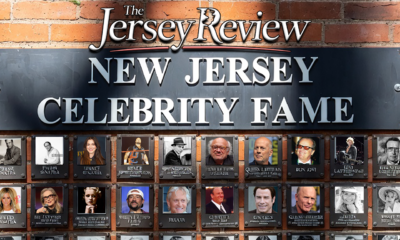
New Jersey Fame Wall
-
 Beaches & Towns6 months ago
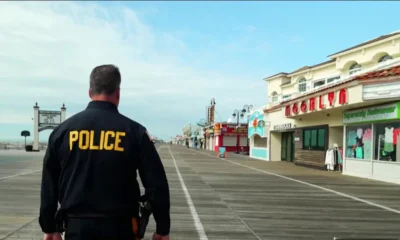
Shore Towns Begin Early Safety Planning Ahead of Summer 2026 Crowds
-

 Beaches & Towns4 months ago
Great White Shark Sightings Spark Early Summer Conversation Along the Jersey Coast
-

 Beaches & Towns7 months ago
Breadsticks Cafe & Grill: A Cheerful Breakfast Spot with Ocean Views
-
 Entertainment8 months ago
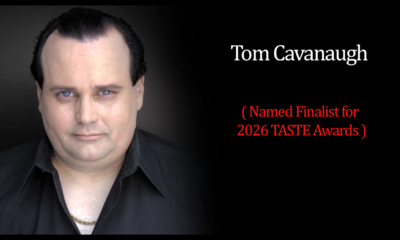
Playwright & Filmmaker Tom Cavanaugh Named Finalist for 2026 TASTE Awards Following Recognition in Asbury Park
-

 Celebrity6 months ago
Southside Johnny: The Grandfather of the New Jersey Sound
-

 Features5 months ago
Il Leone: A Refined Italian Experience Rooted in Family, Fire, and Flavor in Matawan
-
 Entertainment7 months ago
Alice In Chains